There’s a conversation that happens in a lot of Indian households somewhere between Class 10 results and Class 12 board exams. The student sits quietly while adults debate their future — engineering or medicine, science or commerce, stable job or risky passion. Everyone has an opinion. Nobody is asking the student what they actually want. And the student, somewhere in the middle of all of it, has genuinely no idea either.
Educational counseling for students exists to interrupt that pattern before it hardens into a wrong decision.
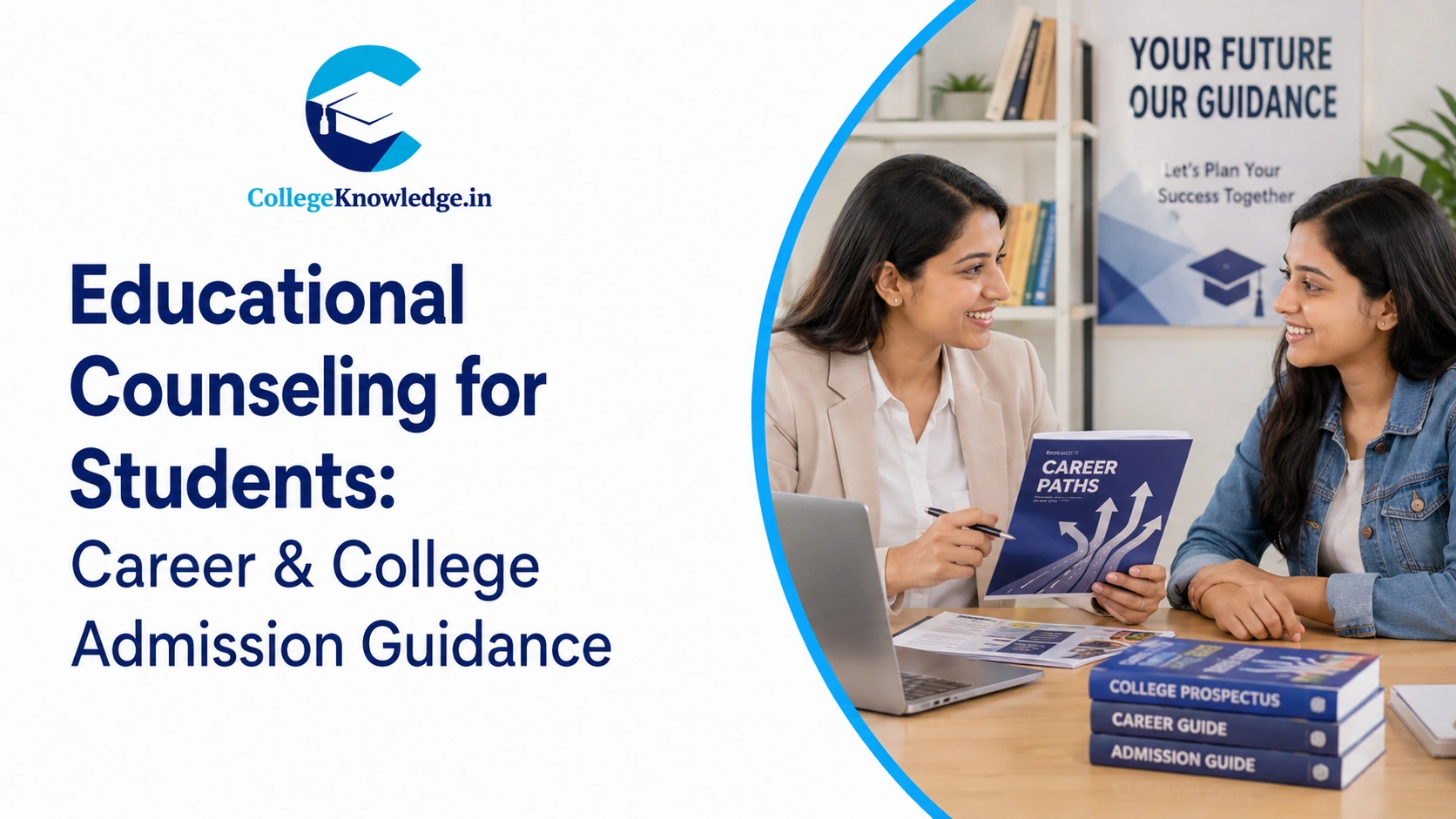
At its core, educational counseling is a structured process that helps students understand their own strengths, map those strengths to realistic career options, choose courses that make sense for their personality and goals, and navigate college admissions without panic. It’s part career guidance, part aptitude analysis, part emotional clarity — and it’s increasingly important at a time when both the number of options and the pressure to choose correctly have never been higher.
It doesn’t tell students what to do. It helps them figure out what they actually want to do — which turns out to be a much harder question than it sounds.
Why Students Need Educational Counseling in 2026

Here’s a number that should put the confusion in context: India produces roughly 1.5 million engineering graduates every year. A significant portion of them end up in careers that have nothing to do with engineering. Some of them wanted something else from the beginning and never had the space to say so.
That’s not a criticism of engineering as a field. It’s a symptom of what happens when career decisions get made without proper student career counseling — when students choose paths based on what sounds safe, what their relatives chose, what their best friend is doing, or what an Instagram reel made look glamorous.
The 2026 version of this problem has additional layers. AI is reshaping industries at a pace that makes some careers that were stable five years ago look uncertain now. New fields — cybersecurity, UX design, data analytics, environmental science — are growing faster than the awareness of them is spreading into tier-2 and tier-3 cities. A student who wants to pursue something non-traditional now has more genuine options than ever, but also more confusion about how to pursue them and whether they’re worth the risk.
Add parental expectations, board exam pressure, social media comparisons, and the general anxiety of being 17 years old and expected to have a life plan — and you have a generation of students who are not lazy or unmotivated, they’re just genuinely overwhelmed.
Educational Counseling For Students After 10th vs After 12th
These are two very different conversations, and conflating them creates confusion.
Counseling after 10th is primarily about stream selection — Science, Commerce, or Arts — and the subject combinations within each. This sounds like a small decision. It isn’t. The stream a student chooses in Class 11 determines which entrance exams they can appear for, which undergraduate courses are open to them, and in many cases, which broad career directions remain available. A student who realizes in Class 12 that they chose the wrong stream faces a genuinely difficult situation.
Good stream selection counseling at this stage doesn’t just tell students which stream is “best” — it asks them which subjects they actually enjoy, which kind of thinking comes naturally to them, and which careers feel interesting enough to study for three to four hours a day without resenting it.
Educational Counseling for students after 12th shifts focus to course selection, college guidance, entrance exam planning, and actual career direction. By this point, a student’s academic profile is established. The question is how to build on it most effectively — which college genuinely matches the profile, which course has the right balance of interest and market demand, whether a top private institution makes more financial sense than a lower-ranked government one in a particular field.
Both stages need proper educational career guidance. Waiting until after 12th to have the first serious career conversation means two years of school have already been spent without a coherent direction.
How Educational Counseling Actually Helps Students
The most important thing a good educational counselor for students does isn’t provide information. Information is available everywhere. What they provide is a framework for thinking through a decision that has too many variables to think through alone.
They help students identify strengths that aren’t always obvious from marks. A student who scores average in mathematics but demonstrates strong logical reasoning and communication skills might be a natural fit for law or management — something a marksheet alone won’t reveal. Aptitude analysis, when done properly, surfaces these patterns.
They help students understand what a career actually looks like in practice — not the romanticized version, the daily reality. A student drawn to psychology because it sounds interesting should also know what the path to becoming a clinical psychologist in India involves, how long it takes, and what the income trajectory looks like. That information doesn’t discourage genuine interest — it prepares for it.
And they help students separate their own preferences from the preferences that have been projected onto them. That last one is harder than it sounds, especially for students who have grown up in households where “good career” has a very specific, narrow definition.
Career Guidance for Different Student Interests

Science students
Science students have the widest door but the most pressure to walk through it in only one direction. Engineering and medicine are not the only options — Data Science, Biotechnology, Aviation, Research, and allied health programs are all strong career paths that suit specific types of thinkers. Student career counseling for science students should expand the conversation, not narrow it to JEE vs NEET.
Commerce students
Commerce students often face a different kind of confusion — too many overlapping options that sound similar. CA vs BBA vs B.Com vs integrated MBA — the differences between these paths are significant and long-term, but they’re not obvious from the outside. Academic counseling services help commerce students understand which path suits their work style, their patience for examinations, and their career ambitions.
Arts and humanities students
Arts and humanities students get the least useful guidance, usually because counselors themselves are less familiar with the landscape. Law, Psychology, Journalism, Design, UPSC, Content and Media — these are legitimate career paths with strong growth trajectories in 2026. Students in arts streams often just need someone to take their questions seriously rather than deflect them toward “safer” options.
Creative and design students
Students need counselors who understand the difference between NID, NIFT, private design schools, and online certification programs — and which of those routes actually leads to industry employment. Portfolio development, entrance test preparation, and course quality all need to be discussed together.
Technology and AI careers
Machine Learning, Cybersecurity, Cloud Computing, Product Management — are increasingly accessible without traditional engineering degrees, through specialized undergraduate and certification programs. Future career planning for students in this space requires counselors who are current on industry hiring patterns, not just on what the textbook says.
Educational Counseling for College Admissions
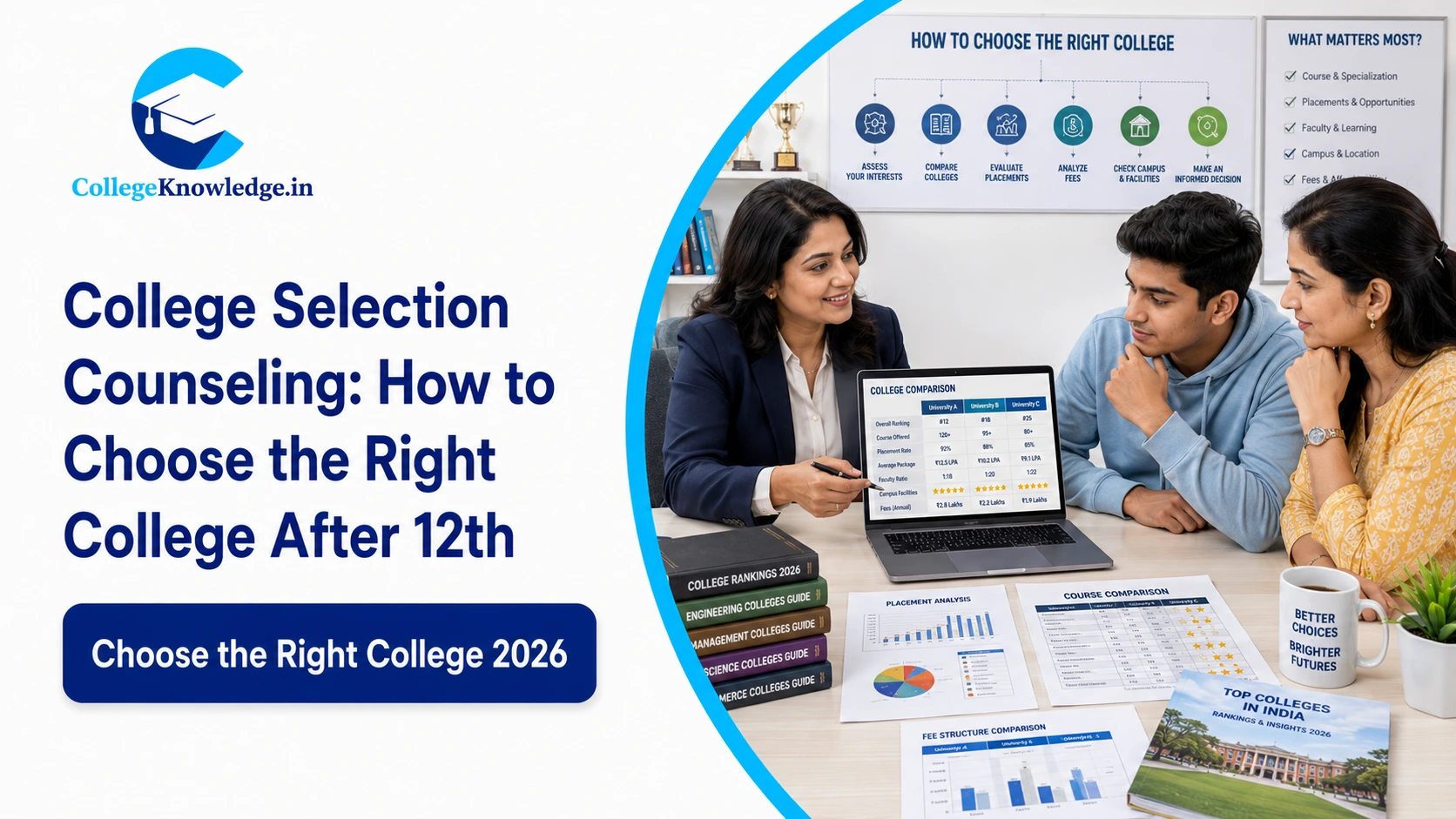
At some point, every educational guidance for students conversation intersects with the admission process — which colleges are realistic, what the entrance exam requirements are, whether a private university makes sense, what scholarships are available, whether direct admission is a viable route.
This is where platforms like College Knowledge become practically useful — students can compare universities across courses and cities, look at real placement data, and connect with counselors who know the admission landscape. The combination of career counseling and college admission guidance in one place means students aren’t being handed a career direction and then left alone to figure out how to get there.
Student admission counseling at this stage should be built on the earlier work — once a student has clarity about what they want to study and why, the college decision becomes significantly easier. Most of the panic in college admissions comes from making both decisions simultaneously, under deadline pressure, without enough self-knowledge to weigh the options clearly.
Parents vs Students: Why Career Discussions Get Stressful

This section doesn’t appear in most career counseling articles, probably because it’s uncomfortable to discuss. But it’s real, and ignoring it doesn’t make it less common.
Career conversations at home often become stressful not because parents don’t care, but because they care too much and in a specific direction. A parent who built financial security through engineering wants their child to have financial security — and engineering is the map they know. A parent who struggled in an unstable career wants their child in something predictable. These are rational fears. They’re just not always rational guidance for a 17-year-old who is a different person with different strengths living in a different economy.
Students, on their side, often can’t articulate what they want clearly enough to argue for it. They have a feeling — “I don’t think engineering is for me” — without the vocabulary or evidence to support it in a high-stakes family conversation.
Counseling for school students and for students after 12th works best when parents are part of at least some of the process. Not to override the student’s direction, but to be in the same conversation. When a counselor explains to a parent why their child’s interest in psychology or design is a legitimate career direction with real market demand, the family dynamic around that conversation often shifts. The student no longer has to fight alone for something they couldn’t fully defend.
That’s a genuinely underrated function of professional educational counseling — it creates shared language for conversations that were previously just conflict.
Step-by-Step Educational Counseling Process
| Step | Counseling Process |
| Step 1 | Understanding student interests and concerns |
| Step 2 | Aptitude and personality analysis |
| Step 3 | Career option exploration based on profile |
| Step 4 | Course and college selection guidance |
| Step 5 | Admission process and deadline support |
| Step 6 | Long-term career roadmap planning |
Questions Students Should Ask During Counseling
Which career options genuinely match my strengths — not just my scores? Which courses in my field of interest have strong placement outcomes in 2026, specifically? What kind of daily work environment suits my personality — structured or open-ended, collaborative or independent? How do I think about balancing what I find interesting with what the market actually pays for? Which colleges within my budget have real outcomes for this specific course, not just a recognizable name?
These are the questions worth asking. They’re better than “which is the best college” — because “best” means different things depending on who’s answering.
Conclusion
Educational counseling for students isn’t about finding someone to make decisions for you. It’s about finding someone who helps you make better decisions for yourself — with more information, more self-awareness, and less panic than you’d have going through the process alone. In a country where the career decision pressure starts at 15 and the stakes feel enormous by 17, that kind of structured clarity is genuinely valuable. Not as a luxury, but as a practical tool for one of the most consequential choices a young person makes.
Get Personalized Educational Counseling — Free & Student-First
Confused about stream selection, career options, or college admissions? College Knowledge connects students with experienced counselors who take the time to understand your interests, strengths, and goals before making any recommendations. 25+ universities, 100+ courses, zero pressure. Start your free counseling session today.
People Also Ask — FAQs
Q1. What is educational counseling?
It’s a structured guidance process that helps students understand their strengths, explore career options, choose courses, and navigate college admissions — through aptitude analysis, career mapping, and personalized academic planning.
Q2. Why is educational counseling important?
Because most students make major career decisions without enough self-knowledge or information. Educational career guidance reduces wrong decisions, builds confidence, and helps students choose paths that genuinely fit their personality and goals — not just what seems safe or popular.
Q3. When should students take counseling?
Ideally at two key moments — after Class 10 for stream selection, and after Class 12 for course and college decisions. Earlier is generally better, since career direction shapes which options remain open at each stage.
Q4. Is career counseling worth it after 12th?
For the vast majority of students, yes. The combination of entrance exam confusion, college comparison, and career uncertainty at that stage is genuinely difficult to navigate alone. Professional educational counseling at this point saves time, reduces panic decisions, and often leads to better outcomes.
Q5. Can counseling help average students?
Consistently yes. Marks are one data point. Aptitude, interest, work style, and realistic career planning matter just as much — sometimes more. Academic counseling services help average scorers find quality paths with genuine upside that they wouldn’t have found through a simple rankings search.
Q6. How do parents support students during career decisions?
By being present in at least some counseling conversations rather than parallel to them. When parents understand the reasoning behind a career direction — not just the name of the course — they’re more likely to support it. Counseling after 10th and 12th works best as a family conversation, not just a student one.