

There’s this moment — usually around 2am — when you’re sitting with a browser full of tabs, entrance exam prep schedules on one side, admission portal deadlines on the other, and somewhere in the middle of it you think: is there another way? And the honest answer is yes. There are MBA colleges in India that admit students without putting them through the CAT-MAT-XAT grind. It’s not a secret. It’s just not talked about enough. So let’s actually talk about it.
This isn’t about finding shortcuts. Some people have work experience, strong academics, or specific life situations that make the entrance exam route genuinely difficult. And the Indian MBA landscape has quietly evolved to accommodate that. Not every program worth attending sits behind a national-level exam.
What Does ‘Without Entrance Exam’ Actually Mean?
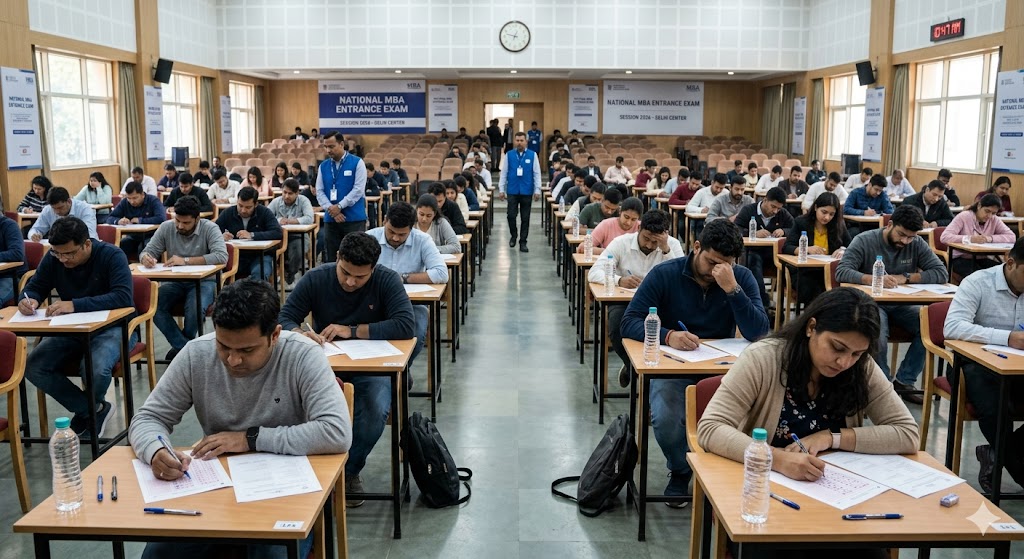
Before listing colleges, let’s be honest about what this phrase covers. Some institutions don’t require CAT or MAT but run their own tests. Others waive exams if you have above a certain percentage in graduation. And a smaller group skips the written exam entirely, relying on interviews, group discussions, and your academic record.
The category we’re really talking about is the third kind — places where your application, your background, your GD-PI performance carry the weight. That’s a real thing. And it’s worth knowing which institutions actually do this.
Colleges That Offer MBA Without a National Entrance Exam
A few names come up consistently when this question gets asked. Not all of them are famous. But some of them have been doing this for decades.
• ICFAI Business School (IBS) — Conducts its own IBSAT. No CAT required. Campuses across Hyderabad, Mumbai, Bangalore and more.
• Symbiosis Centre for Management Studies — Some programs under SNAP allow direct admission for specific categories.
• Amity University — Accepts multiple scores OR runs its own test. Sometimes no exam if grades are strong.
• NMIMS Mumbai — NMAT is their exam, not CAT. Different entirely.
• Manipal University — Merit-based admissions for select MBA programs without national exams.
• MIT World Peace University, Pune — Direct admission routes through academic merit.
• Lovely Professional University (LPU) — Broad intake policies; entrance sometimes waived for high scorers.
• UPES Dehradun — Has its own entrance or accepts graduation marks for MBA.
This list isn’t exhaustive. The landscape changes every cycle. Some private universities quietly shift their policies — worth calling the admission office directly and asking plainly: do I need CAT?
Read More – Which MBA Specialization Has the Highest Salary?
How These Admissions Actually Work
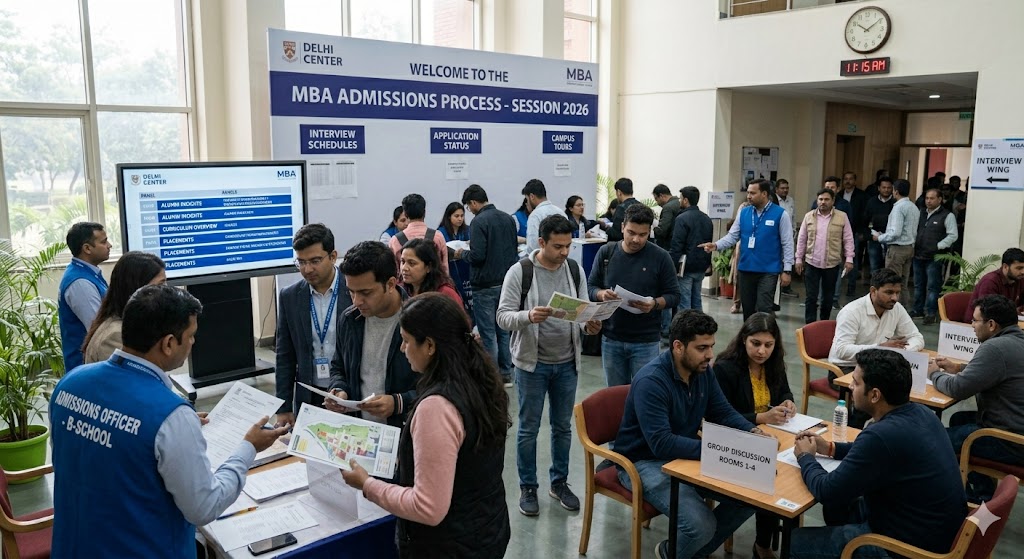
Most of these colleges follow a process that looks something like this:
• Application form with academic records
• Shortlisting based on graduation percentage (usually 50% minimum)
• Group Discussion or Written Ability Test
• Personal Interview
• Final merit list and offer
The interview carries enormous weight here. Because there’s no standardized score to compare you on, the panel leans harder on how you think, how you communicate, and whether you have any real clarity about why you want an MBA. It sounds obvious. Most people are not prepared for it.
Who Should Actually Consider This Route?
Working professionals who can’t take six months off to prep for CAT. Final-year students who missed the exam window. People who genuinely do better in conversations than in timed multiple-choice tests. Candidates from non-metro backgrounds who never had access to expensive coaching.
The MBA without entrance exam route isn’t for people trying to avoid hard work. It’s for people whose hard work shows up differently. And there’s a real distinction there. There are options for Distance MBA as well which many students look for apart from regular MBA.
Things to Watch Out For
Some colleges that advertise this route charge significantly higher fees because they’re not competing for the same talent pool as IIMs. That’s not necessarily wrong — but you should go in with eyes open.
• Check AICTE approval and NAAC accreditation
• Look at placement records — not just average salary but number of students placed
• Ask about alumni network in your target industry
• Understand the fee structure fully before accepting
A degree without reputation is just a certificate. Make sure the college has something real to offer beyond the admission.

One More Thing Worth Saying
The MBA admission process in India has historically been gatekept by entrance exams. That’s changing. Not because quality is dropping — but because the system is finally acknowledging that one test on one morning doesn’t define someone’s potential to lead, manage, or build things. These colleges are part of that shift.
Conclusion
If you’ve been assuming MBA without entrance exam means settling — that assumption deserves a second look. Several legitimate, AICTE-approved institutions offer strong MBA programs through alternative MBA admission in India routes. The key is doing your research before applying, understanding the fee-to-outcome ratio, and preparing seriously for the GD-PI stage. That interview matters more than you think.
FAQs
1. Are MBA colleges without entrance exams recognized by UGC?
Many are, yes. Always verify AICTE approval and university recognition individually. Don’t assume — check the official AICTE portal.
2. Is the quality of education lower at these colleges?
Not necessarily. Quality varies widely at both exam-required and non-exam colleges. What matters is faculty, infrastructure, placement support, and accreditation — not just the admission process.
3. Can I get a government job after MBA from these colleges?
For most government positions, a degree from a recognized university is what matters. If the college is UGC or AICTE approved, you’re generally fine.
4. What percentage do I need in graduation for direct MBA admission?
Most colleges require a minimum of 50% aggregate in any bachelor’s degree. Some require 55% or have SC/ST relaxations. Always check the specific institution’s criteria.
5. Do these colleges offer scholarships?
Some do, based on merit or financial need. ICFAI, Amity, and LPU have scholarship programs. Always ask during the admission process — it’s not usually advertised loudly.