
Every year, around March and April, something quietly breaks inside a few lakh households across India.
It’s not dramatic. No one talks about it on the news. But there’s a student , maybe 17, maybe 18 , sitting with their phone at midnight, searching things like “can I still get into a good college with 65%” or “is direct admission real or a scam.” Their parents are stressed. Their relatives have opinions. Their school friends seem to already have a plan. And they’re sitting there not knowing where to even start.
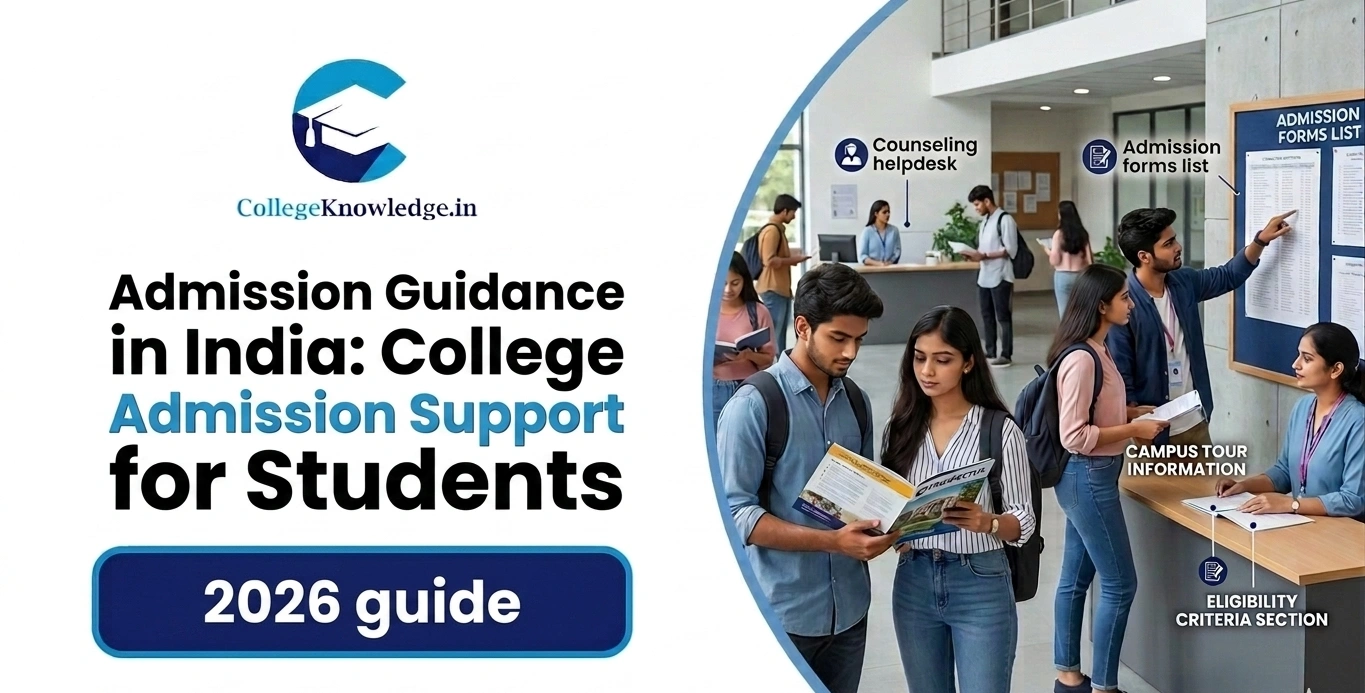
If that’s you right now, or someone you know , this article exists for you.This guide provides complete Student admission help information for students and parents looking for the right college, course, and admission pathway in 2026.
Student admission help in India isn’t a fancy phrase. It just means having someone , a counselor, a trusted platform, a knowledgeable guide , walk you through what your options actually are, so you don’t make a decision worth 4 years and several lakhs based on panic or a random YouTube video.
What Is Student admission help in India?

In plain terms, Student admission help in India is any support that helps a student move from “I have my marks” to “I have confirmed my college seat” , without losing their mind in between.
This includes:
- College admission guidance , understanding which colleges fit your marks, budget, and goals
- Career counseling for students , figuring out what course actually makes sense for your future, not just what’s trending
- Entrance exam guidance , JEE, NEET, CUET, CLAT, and what to do if you couldn’t give them or didn’t score as expected
- Direct admission support , navigating management quota or private university admissions
- Documentation help , knowing which certificates you need and when
- Scholarship guidance , because good colleges sometimes cost less than people think
Think of it as having an informed older sibling who’s already been through the process , and actually tells you the truth instead of just what sounds reassuring.
Why Students Need Admission Guidance in 2026
Here’s the honest answer: because the system is overwhelming, and the internet makes it worse.
There are over 50,000 colleges in India. Thousands of courses. Multiple entrance exams. Three rounds of counseling for some streams. State quota vs all-India quota. Private universities with their own systems. And layered on top of all of that , misinformation. Paid rankings. Fake reviews. Consultants who get a commission for pushing you toward a specific college regardless of whether it’s right for you.This is why reliable Student admission help in India has become more important than ever in today’s complex admission landscape.
Some real things students face in 2026:
CUET pressure
The Common University Entrance Test now covers central universities, but many students aren’t sure which universities accept it, which have their own tests, and what happens if they want to switch streams.
Too many choices, too little clarity
A student who wants to do Computer Science has options across engineering, BCA, BSc CS, integrated MCA, and B.Tech lateral entry. Each has different eligibility, different career outcomes, different costs. No one explains this properly.
Parent vs student conflict
The student wants design or journalism. The parent wants engineering or medicine. This is not a small thing. A wrong college choice made under pressure can derail years.
Fear of being scammed
There are real consultants and fake ones. It’s hard to tell them apart. Students end up either trusting the wrong person or trusting no one, which leaves them directionless.
This is exactly why platforms like College Knowledge exist , to cut through the noise and give students actual, actionable guidance based on their specific situation, not a generic template.
Student admission help in India for Different Courses
Engineering
Eligibility requires Physics, Chemistry, and Maths in Class 12. JEE Main is the primary entrance exam, with JEE Advanced for IITs. Private universities like Manipal, VIT, SRM, and Amity conduct their own exams or accept JEE scores for direct admission in India. If your JEE score is average, you still have strong B.Tech options , the key is knowing which branches and colleges are worth it.
Medical (MBBS/BDS)
NEET is mandatory. Full stop. Government seats are competitive, but private medical colleges have management quota seats with defined fees. BAMS, BHMS, and BPT are emerging alternatives worth considering if NEET scores fall short.
Management (BBA/MBA)
BBA admissions are mostly merit-based or through state-level tests. MBA requires CAT, XAT, MAT, or CMAT. Many private universities offer direct college admission in BBA/MBA programs, making this one of the more flexible streams.
Law
CLAT is the gateway for National Law Universities. But private law colleges and deemed universities like Symbiosis, Christ, and Amity have college admission guidance processes that are far more accessible.
Design
JEE Paper 2 (B.Arch) and NID/NIFT entrance exams for design. Portfolio matters more than marks here , and this is where many students with lower boards but genuine creative talent can find an excellent fit.
Commerce & Arts
BCom, BA, BSc , most are merit-based. CUET is now used for central universities. Admission counseling India is especially helpful here because students often underestimate how many good colleges are available in these streams.
Can You Get Direct Admission in Colleges in India?
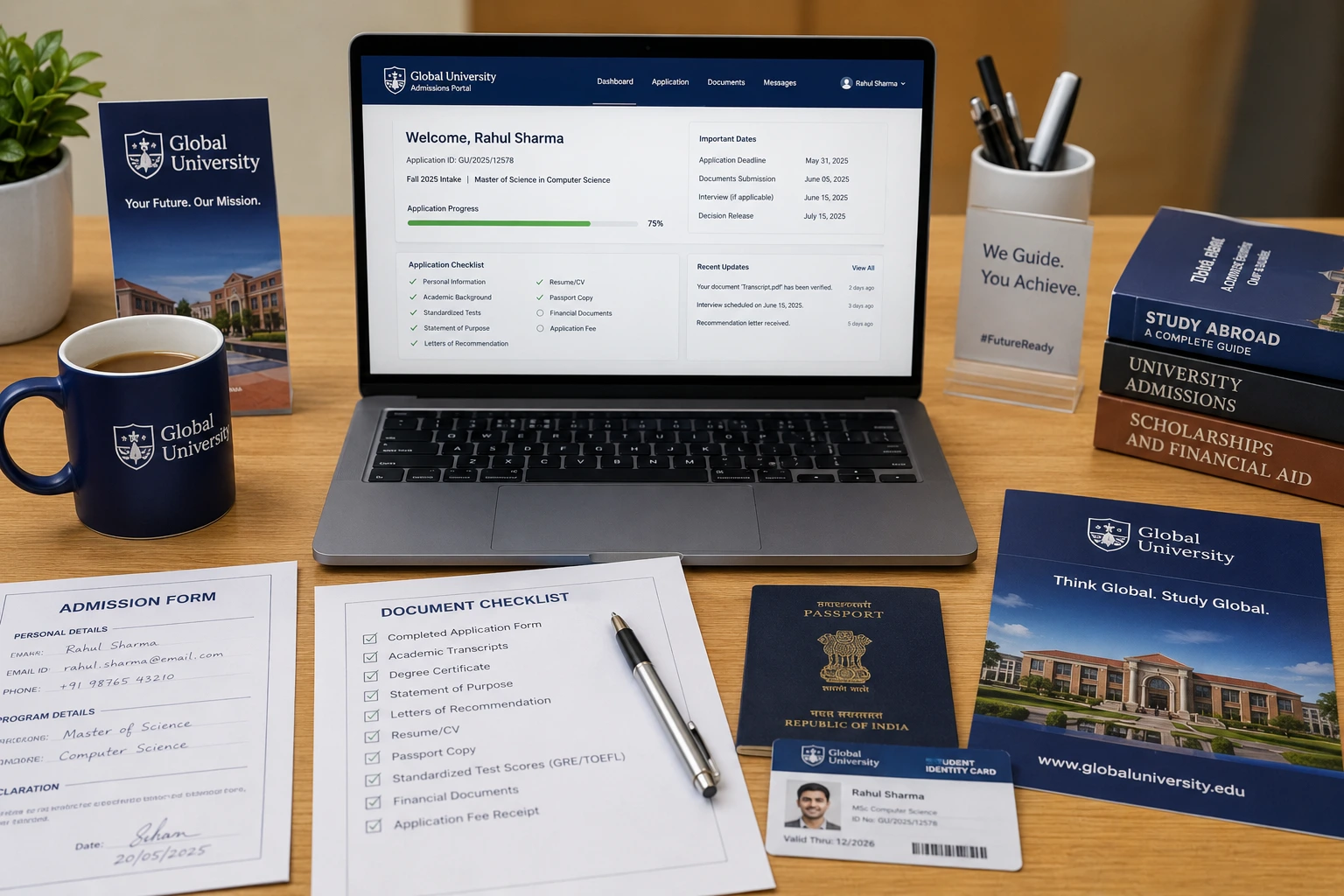
Yes , and this question needs a clear, honest answer because there’s a lot of confusion around it. Many students seek Student admission help in India specifically to understand whether direct admission opportunities are legitimate and suitable for their situation
Direct admission in private colleges and deemed universities is legal and legitimate. It typically works through:
- Management quota– A certain percentage of seats in private colleges are reserved for direct admission, with slightly higher fees. This is regulated and recognized.
- Merit-based direct admission– Many private universities admit students based on their Class 12 marks and a personal interview, without requiring a national entrance exam.
- Institutional entrance tests– Universities like Manipal (MET), VIT (VITEEE), and SRM (SRMJEEE) conduct their own tests. Clearing these is a form of direct admission.
What’s not legitimate: Anyone promising you a confirmed MBBS or B.Tech seat in a government college without proper counseling rounds, or asking for cash payments in exchange for “guaranteed admission.” That’s fraud.
If someone is offering you a seat before counseling results are out, or asking for large cash amounts without documentation , run.
How to Choose the Right College Without Regret
This is the question nobody helps students answer properly. Everyone talks about getting admission. Nobody talks about whether it was worth it.
A few things that actually matter:
Placement records, not placement claims
Ask for the actual recruiter list and average package , not the “highest package.” Any college can cite one exceptional placement.
NAAC/NBA accreditation
An accredited college has gone through external evaluation. An unaccredited private college is a risk you’re paying for.
City and campus environment
If you’re going to spend four years somewhere, the city matters. Cost of living, internship opportunities, peer network , these shape your experience more than the college name sometimes.
Branch over brand-
A mediocre branch at a “famous” college will serve you worse than a good branch at a solid mid-tier college. CSE at a Tier-2 college beats Civil Engineering at a Tier-1 college if you want a software career.
Return on investment–
If a college charges ₹15 lakhs for a B.Tech but the median placement is ₹4 LPA , that math is painful. Ask the uncomfortable questions before you sign.
Common Mistakes Students Make During Admission
Choosing based on Instagram reputation
A college with a beautiful campus and great Reels is not the same as a college with great outcomes.
Panic admissions
Accepting the first seat available out of fear , and then spending four years regretting it. There is almost always time to think, even when it doesn’t feel like it.
Trusting unverified consultants
If a consultant can’t give you verifiable details about the colleges they’re recommending, be skeptical. A legitimate admission support service will always be transparent.
Ignoring accreditation
Accreditation isn’t just a certificate. It affects the validity of your degree, your eligibility for higher studies, and sometimes even government jobs.
Copying a friend’s choice–
Your marks, interests, financial situation, and goals are different from theirs. What works for them may not work for you.
Documents Required for College Admission 2026
| Document | Required For |
| Class 10 Marksheet & Certificate | All admissions |
| Class 12 Marksheet | All admissions |
| Transfer Certificate (TC) | Most colleges |
| Migration Certificate | Colleges in a different state |
| Character Certificate | Most colleges |
| Entrance Exam Scorecard | JEE/NEET/CUET/CLAT as applicable |
| Caste/Category Certificate | Reserved category students |
| Domicile Certificate | State quota admissions |
| Passport-size Photographs | All admissions |
| Aadhaar Card | Identity verification |
| Income Certificate | Scholarship applications |
| Medical Fitness Certificate | Engineering/Medical colleges |
Keep physical copies and scanned PDFs of everything. Admission counters don’t wait for missing documents.
Student admission help in India Process: Step by Step
A structured Student admission help in India process reduces confusion and increases the chances of securing admission to the right institution.
Step 1- Career conversation
Before college, figure out what direction you actually want to go in. This isn’t about choosing a job , it’s about understanding what kind of work excites you.
Step 2- Course selection
Based on your interests, marks, and realistic expectations, narrow down the courses.
Step 3- College shortlist
Using your entrance scores, budget, and location preferences, create a realistic list of 8–10 colleges.
Step 4- Eligibility check
Confirm you meet the minimum requirements for each college on your list.
Step 5- Application process
Fill forms carefully. Missed deadlines are one of the most avoidable reasons students lose good seats.
Step 6- Counseling rounds
For government colleges, attend all rounds. Don’t exit early thinking you’ll get something better in the next round unless you have a strategy.
Step 7- Admission confirmation
Once a seat is allocated and you decide to accept , pay fees, submit documents, and confirm your enrollment within the given window.
Top Colleges Students Commonly Apply For in 2026
Rather than a ranking, here’s a more useful way to think about this:
Central Universities– (Delhi University, JNU, BHU) , highly competitive, excellent value for cost, CUET-based.
NITs and IIITs– strong engineering options for JEE qualifiers in the 75–99 percentile range.
Private Deemed Universities– VIT, Manipal, Amity, SRM, Christ University, Symbiosis , offer direct admission in India with their own entrance tests or merit-based processes.
Emerging private colleges– Several newer private universities in Tier-2 cities are building genuinely strong programs in tech, media, and design. Worth researching if you’re open to exploring.
Specialized institutions– NIFT for fashion, NID for design, NLSIU and NALSAR for law, IHM for hospitality. These are competitive but worth applying if the field is right.

When Should I Start Applying for College in 2026 in India?
One of the biggest mistakes students make is waiting until board results are announced before researching colleges. In reality, the admission process begins much earlier.
If you’re planning to take entrance exams such as JEE, NEET, CUET, CLAT, NIFT, or CAT, preparation and application timelines often start months in advance. Many private universities also open registrations between October and April, depending on the course and intake cycle.
A good rule of thumb is to begin exploring courses, colleges, entrance exams, and eligibility requirements during Class 12 itself. This gives you enough time to compare options, prepare documents, track important deadlines, and avoid last-minute decisions.
Students seeking student admission help should ideally start their college research at least 6–12 months before admissions begin. Early planning provides more choices, better scholarship opportunities, and less stress throughout the admission process.
Conclusion
Student admission help in India has become an essential part of the college admission journey in India. The students who end up in the right college are rarely the ones with the best marks. They’re the ones who asked the right questions early enough, made informed choices, and didn’t panic.
If you’re feeling overwhelmed right now, that’s completely normal. Almost every student does at this point. What matters is what you do next , whether you make decisions based on fear, or based on clarity.
Take the time to understand your options. Get college admission guidance from someone who’s actually looking out for you. And make a decision you’ll feel good about four years from now.
Get Personalized Student admission help in India , Talk to College Knowledge
Confused about which college fits your marks, budget, and goals?
College Knowledge offers free, personalized Student admission help in India , from course selection and college shortlisting to direct admission support and documentation guidance.
No pressure. No commission-based pushing. Just honest college admission guidance built around your situation. Whether you have strong marks, average marks, or missed an entrance exam , there’s a path forward. Let’s find it together.
FAQ Section
Q.1 What is Student admission help in India?
Student admission help in India includes college selection, admission counseling, career guidance, application support, documentation assistance, and direct admission guidance for students.
Q.2 Is direct admission legal in India?
Yes. Management quota admissions and private university admissions through approved processes are legal and regulated.
Q.3 Can I get admission with low entrance marks?
Yes. Many private universities and colleges offer admission opportunities even with average entrance exam scores.
Q.4 Can I get admission in 2nd year directly?
Yes, through lateral entry programs, eligible students can get direct admission to the second year of courses like B.Tech. This option is commonly available for students who have completed a relevant diploma.
Q.5 Can I study abroad with 50% marks?
Yes, many universities in countries like Canada, Australia, and the UK accept students with 50% marks. Admission depends on the university, course requirements, and your overall academic profile.
Q.6 What does it mean to be eligible for direct admission?
Being eligible for direct admission means you meet a college’s admission criteria without a national entrance exam. Selection may be based on Class 12 marks, interviews, or institutional admission processes.