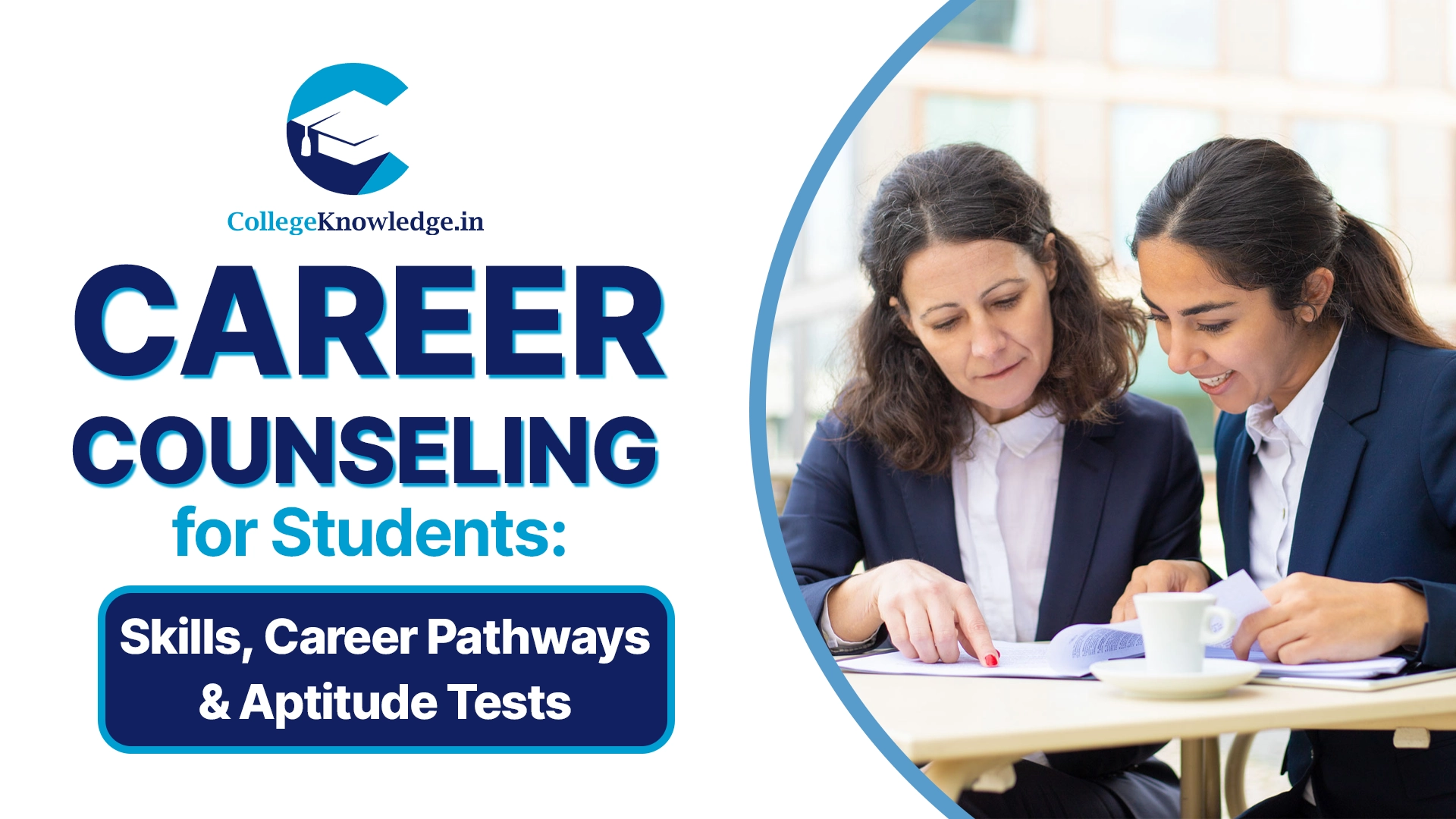
There’s this moment, late at night, when the world outside your window is quiet, and the only thing buzzing is your own mind. You’re thinking about the future. Maybe it’s the first time you’re really thinking about it—not the vague “I’ll figure it out later,” but the deep, slightly terrifying “What am I even supposed to do with my life?” And in that fog of confusion and curiosity, career counseling for students becomes more than just a school thing or a checkbox on a to-do list. It’s a flashlight in a dark room. Not perfect, not clear, but at least it shows shapes, possibilities, doors you might open—or maybe just glance at and walk away.
Because here’s the truth: no one really tells you how much of life is leaning into your skills, noticing them, naming them, figuring out which ones feel like home. And then there’s the terrifying other side—the endless career pathways. Medicine? Arts? Engineering? Digital content creation? Entrepreneurship? Some paths feel like they’re glowing, like, yes, I could walk there in my socks, barefoot if I have to. Others feel like distant islands you might never reach. And then, just to make it more fun, there’s the whole world of aptitude tests, ticking boxes, measuring this, scoring that, giving numbers to something that feels messy and human.

Understanding Your Skills
Let’s start there—skills. They aren’t just the stuff you learn in class or the things that look good on a resume. No. Skills are often hidden. Sometimes they’re quiet. Maybe it’s patience, maybe it’s curiosity, maybe it’s the ability to talk to anyone in the room and make them laugh or feel understood. Some students think their skills are obvious. They’re not. Some don’t know they even exist until they’re tested, pushed, or just stumble into them.
Real career counseling for students digs here first. Not “what grades do you have?” but “what do you actually do well without thinking?” The counselors ask questions, they watch, they notice small things—how you approach a problem, how you express yourself, how you handle failure. Because your skills—technical, social, emotional, creative—are the lens through which every career pathway will look right or wrong for you. There’s also this delicate balance: the skills you have now, versus the skills you can grow. Some paths demand what you don’t have yet, but might love learning. That’s where it gets interesting, messy, and hopeful all at once.
Exploring Career Pathways
career counseling for students:-

And then, the pathways. There are thousands, millions, and each one branches into smaller branches. You feel dizzy just thinking about it. And yet, you know you can’t ignore it. A career pathway isn’t just a job title. It’s the environment, the people, the rhythm of the work, the type of problems you solve every day. You might have imagined yourself as a doctor saving lives, but do you enjoy the hospital chaos, the late-night calls, the heavy responsibility? Or do you imagine yourself coding in a quiet corner, headphones on, solving puzzles for hours, and never speaking to a patient face-to-face?
Good career counseling for students makes these possibilities visible. It’s not a map with a straight arrow. It’s a garden. You wander, you sniff, you touch, maybe bite into something sweet or sour, and eventually you notice what you linger on. It’s messy. It’s human. Some students feel pressure from parents, society, friends—“engineering, because that’s safe,” or “arts, because it’s creative.” But the truth is, the pathways only make sense when they connect to your skills and your inner rhythm.
There’s a thing about aptitude tests here too. They aren’t magic, but they’re mirrors. They reflect your inclinations, your natural tendencies, sometimes your blind spots. Suddenly a path you never considered glows faintly. Suddenly a skill you thought was useless is highlighted, and you think, “Hmm. Maybe I can do this after all.” They are tools, nothing more, nothing less, but sometimes tools shine in ways our own blurry eyes cannot.
Role of Aptitude Tests
career counseling for students:-
These tests are weirdly intimate. They ask about preferences, about problem-solving, about patience, about how you think. And when you sit with your results, it can be startling. “You’re good at logical reasoning? Huh. That’s why I liked coding games.” “You have high empathy? That’s why I always ended up mediating in class.” The numbers, the charts, the scores—they are abstract, but the feeling behind them is real.
Some students hate them. Some trust them blindly. But in honest career counseling for students, they are just one piece of the puzzle. They help identify patterns, potential, and fit. They can guide you toward certain career pathways/career counseling for students, or make you pause and reconsider. What they can’t do is tell you everything. They can’t measure passion, persistence, or curiosity—the messy, human things that matter most.
Integrating Skills, Pathways, and Tests

And here is where it gets a little wild. Because now you have three things to juggle: what you are good at (skills), what is possible (career pathways), and what the tests tell you about potential (aptitude tests). They overlap, sometimes they contradict. Some students feel like it’s a strict formula: “Do this, get that.” But life isn’t a formula. It’s an experiment. And career counseling for students is more like setting up small experiments, tasting options, testing limits.
career counseling for students:-
- Notice what sparks your curiosity without pressure.
- Reflect on how your skills align with potential work environments.
- Use aptitude tests as signposts, not gates.
- Talk to mentors, seniors, professionals. Ask messy questions. Ask uncomfortable questions.
It’s okay to pivot. It’s okay to feel lost. In fact, some of the most important self-discoveries happen in that uncomfortable, quiet space. And sometimes, the clarity comes years later—but that’s okay too.
Practical Steps in Career Counseling

career counseling for students:-
There’s no single path, but there are steps that make the fog thinner. A rough, human guide might look like this:
- Self-assessment: Identify skills, interests, strengths, weaknesses. Not superficially, but deeply, over time. Journaling helps. Observing your own behavior, noticing patterns, what excites or frustrates you.
- Explore pathways: Research fields, talk to people in those fields, shadow professionals if possible. Map career pathways like rivers and tributaries—notice where the water might flow.
- Take aptitude tests: Use them as mirrors. Observe tendencies, inclinations, problem-solving styles, emotional intelligence. Compare results with your own observations.
- Reflect and reconcile: Where do your skills, interests, and test results intersect? Where do they clash? Listen to that friction—it often points to growth edges.
- Plan experiments: Short internships, volunteering, online projects. Try different career pathways safely, without locking into them forever.
These steps aren’t linear. They are circular. Messy. Imperfect. That’s the point. Real growth comes from the tension, the trial, the quiet reflections at 2 a.m. when the world is asleep and you’re still wondering who you are.
Conclusion
In the end, career counseling for students isn’t about telling anyone what to do. It’s about helping students notice themselves in ways they didn’t before. About connecting dots between skills, career pathways, and aptitude tests without feeling trapped by them. Life will always have uncertainty. What matters is having the tools to navigate it, to experiment, to stumble, to discover what feels like home, even if it changes a dozen times along the way. The quiet power lies in awareness. In noticing what makes your chest lift or your mind spark. That is where meaningful work begins.
Read this detailed guide to understand career counseling for students, including skills, career pathways and aptitude tests in a simple, student-friendly way:-
60-Day Study Plan for IPU CET MCA 2026 – From Basics to Advanced
FAQs
1. Why is career counseling important for students?
Career counseling provides guidance and perspective, helping students align their skills and interests with possible career pathways, while also making sense of aptitude tests.
2. How do aptitude tests help in career decisions?
They highlight natural tendencies, strengths, and potential areas for growth, offering a structured reflection that complements self-discovery and guidance.
3. Can skills be developed during school years?
Absolutely. Skills are a mix of innate ability and learned behaviors. With observation, practice, and feedback, students can grow and adapt their strengths.
4. How can students explore career pathways effectively?
Through research, internships, mentorship, and practical experiences, students can get a real feel for different careers and decide what aligns with their skills and passions.
5. Is it normal to feel lost during career planning?
Completely normal. The process is inherently messy. Awareness, reflection, and exploration over time usually lead to clarity. Feeling lost often signals growth potential.